Copper peptide studied for collagen synthesis and antioxidant activity.
Overview
GHK-Cu, also known as copper peptide, is a tripeptide complex consisting of glycyl-L-histidyl-L-lysine bound to a copper(II) ion. It is one of the most extensively studied copper-binding peptides in dermal and wound research literature, with published investigations spanning over four decades since its initial characterisation by Dr Loren Pickart in 1973.
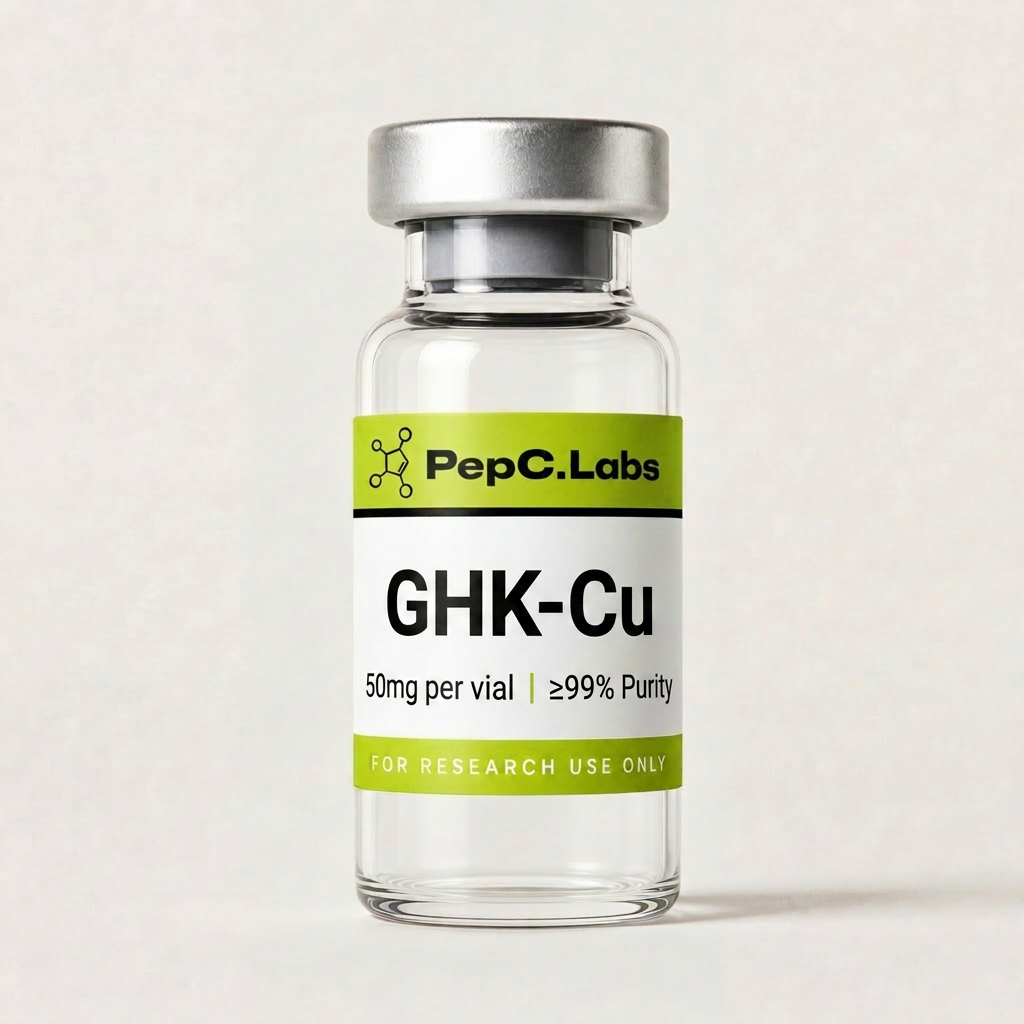
This vial contains 50mg of GHK-Cu as a lyophilised powder for reconstitution with sterile diluent in the laboratory.
What is GHK-Cu?
GHK is a naturally occurring tripeptide that circulates in human plasma and has been shown in published research to bind copper ions with high affinity. The copper-bound form (GHK-Cu) has been the subject of extensive in vitro and preclinical investigation into its role in dermal fibroblast research, collagen synthesis pathway studies, and antioxidant activity models.
Published research in cell culture and animal models has explored GHK-Cu in the context of:
Fibroblast proliferation and collagen synthesis research
Dermal wound model studies
Antioxidant enzyme activity research
Copper-dependent enzymatic pathway investigation
Matrix metalloproteinase regulation research
Mechanism of Action
GHK-Cu is thought to function as a carrier for copper ions into cells, where the copper participates in a range of enzymatic reactions. Researchers have investigated how the tripeptide-copper complex influences genes associated with extracellular matrix remodelling in cell culture models. A published gene expression study reported that GHK-Cu modulates the expression of over 4,000 human genes, including those involved in tissue remodelling and antioxidant defence.
The precise downstream mechanisms remain under active investigation, and most published research on GHK-Cu is conducted in vitro or in rodent dermal models.
Published Research
Peer-reviewed literature on GHK-Cu spans several decades. Early research focused on its role as a copper-binding factor in human plasma. More recent work has explored its effects in:
Dermal fibroblast research
Wound model studies in rodents
Hair follicle research in animal models
Antioxidant pathway investigation
Inflammatory marker research
These studies are preclinical in nature. GHK-Cu is not approved by the TGA for any therapeutic indication and is supplied strictly as a research reagent.
Quality and Verification
A published laboratory report is linked on this product page. Check its sample description, methods and batch information, and contact support to confirm documentation for the size and batch you need. The vial is shipped lyophilised to preserve stability during transit and should be stored at -20°C prior to reconstitution and 2-8°C after reconstitution in the laboratory.
Further Reading
For background on handling lyophilised research peptides, see our
reconstitution calculator.
Disclaimer
For research use only. Not for human consumption. The information provided is for educational and research purposes only. This product is not intended to diagnose, treat, cure, or prevent any disease. Always consult published peer-reviewed literature before designing research protocols.