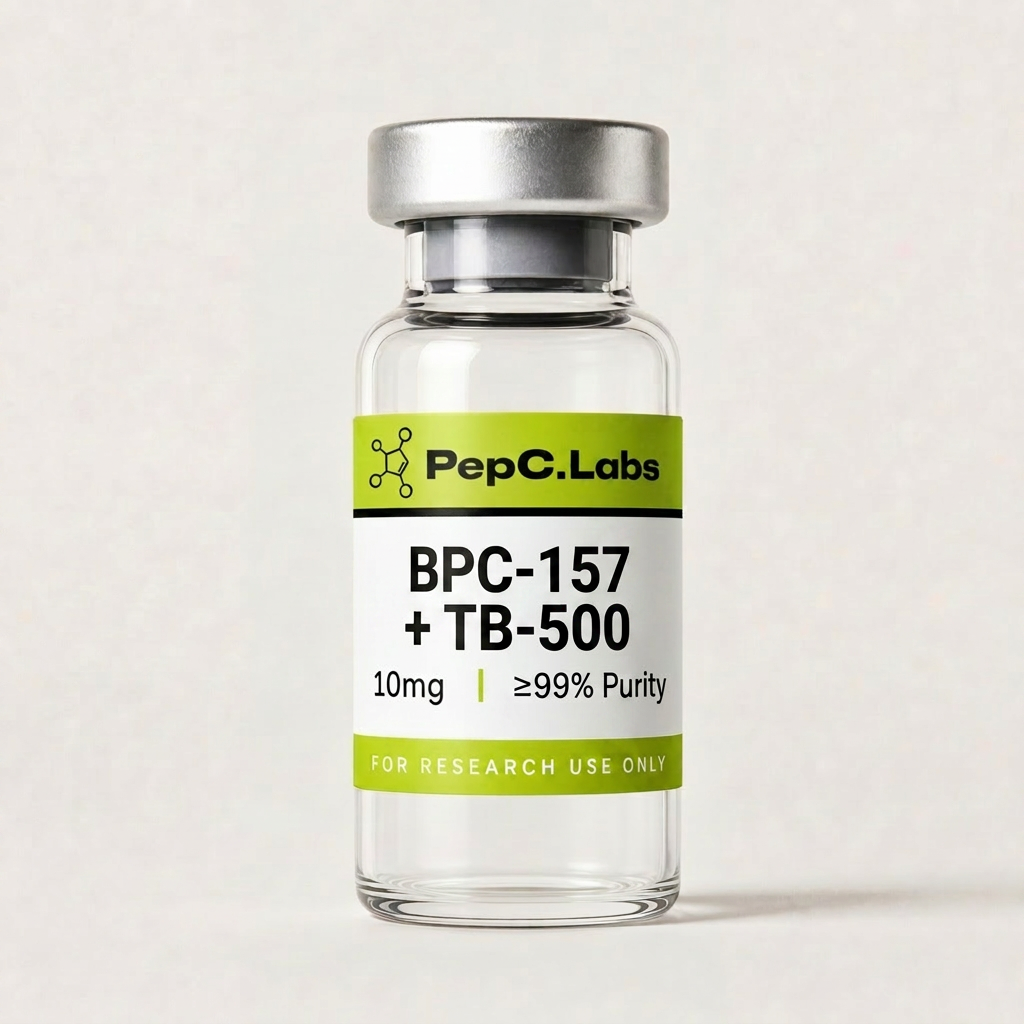
Combined peptide blend of BPC-157 (5mg) and TB-500 (5mg). Widely studied together for synergistic tissue repair and recovery in research models.
Overview
BPC-157 and TB-500 are two of the most widely studied research peptides in preclinical tissue repair literature. Each compound has an independent body of published research, and the combination is frequently investigated in animal models where scientists are exploring additive or synergistic effects on soft tissue response mechanisms.
This blend contains 5mg of BPC-157 and 5mg of TB-500 per vial, supplied as a lyophilised powder for reconstitution with sterile diluent in the laboratory.
What is BPC-157?
BPC-157 is a synthetic pentadecapeptide derived from a partial sequence of body protection compound (BPC), a larger protein first isolated from human gastric juice. Its 15-amino-acid fragment has been the subject of extensive preclinical investigation since the early 1990s, primarily in rodent models of injury and inflammation.
Published research in animal models has explored BPC-157 in the context of:
Tendon and ligament tissue repair mechanisms
Gastrointestinal mucosal integrity research
Angiogenesis and microvascular response studies
Nitric oxide pathway modulation
Scientists are investigating how BPC-157 interacts with growth hormone receptor expression and the VEGFR2-Akt pathway in tissue repair contexts. A substantial body of preclinical literature exists in peer-reviewed journals, though clinical translation to humans remains limited and this compound is not approved by the TGA for any therapeutic indication.
What is TB-500?
TB-500 is a synthetic fragment corresponding to the first 22 amino acids of Thymosin Beta-4, a naturally occurring peptide involved in actin sequestration and cellular mobility. Thymosin Beta-4 is one of the most abundant intracellular proteins in mammals and has been the subject of decades of research into its role in cytoskeletal organisation.
Researchers have explored TB-500 in animal models for:
Cellular migration and angiogenesis research
Collagen deposition in dermal wound models
Inflammatory marker modulation
Cardiac tissue response following ischemic injury models
Preclinical studies suggest TB-500 may influence actin polymerisation and endothelial cell response, though the precise molecular mechanisms remain an active area of investigation.
Why Are BPC-157 and TB-500 Studied Together?
The two peptides are frequently combined in research protocols because they appear to target distinct cellular pathways involved in soft tissue response. BPC-157 is primarily associated with angiogenic and growth factor pathway research, while TB-500 is associated with cellular migration and actin dynamics. Scientists investigating tissue repair models in rodents have designed protocols that co-administer both compounds to explore potential additive effects.
The published research on this combination is almost entirely preclinical. Clinical data in humans is extremely limited, and both compounds are classified as research chemicals rather than approved therapeutic agents.
Quality and Verification
A published laboratory report is linked on this product page. Check its sample description, methods and batch information, and contact support to confirm documentation for the size and batch you need. The vial is shipped lyophilised (freeze-dried) to preserve stability during transit and should be stored at -20°C prior to reconstitution and 2-8°C after reconstitution in the laboratory.
Further Reading
For background on handling lyophilised research peptides, see our
reconstitution calculator and published research overviews in our
blog.
Disclaimer
For research use only. Not for human consumption. The information provided is for educational and research purposes only. This product is not intended to diagnose, treat, cure, or prevent any disease. Always consult published peer-reviewed literature before designing research protocols.