A tripeptide antioxidant studied for its role in oxidative stress reduction and cellular detoxification pathways.
Overview
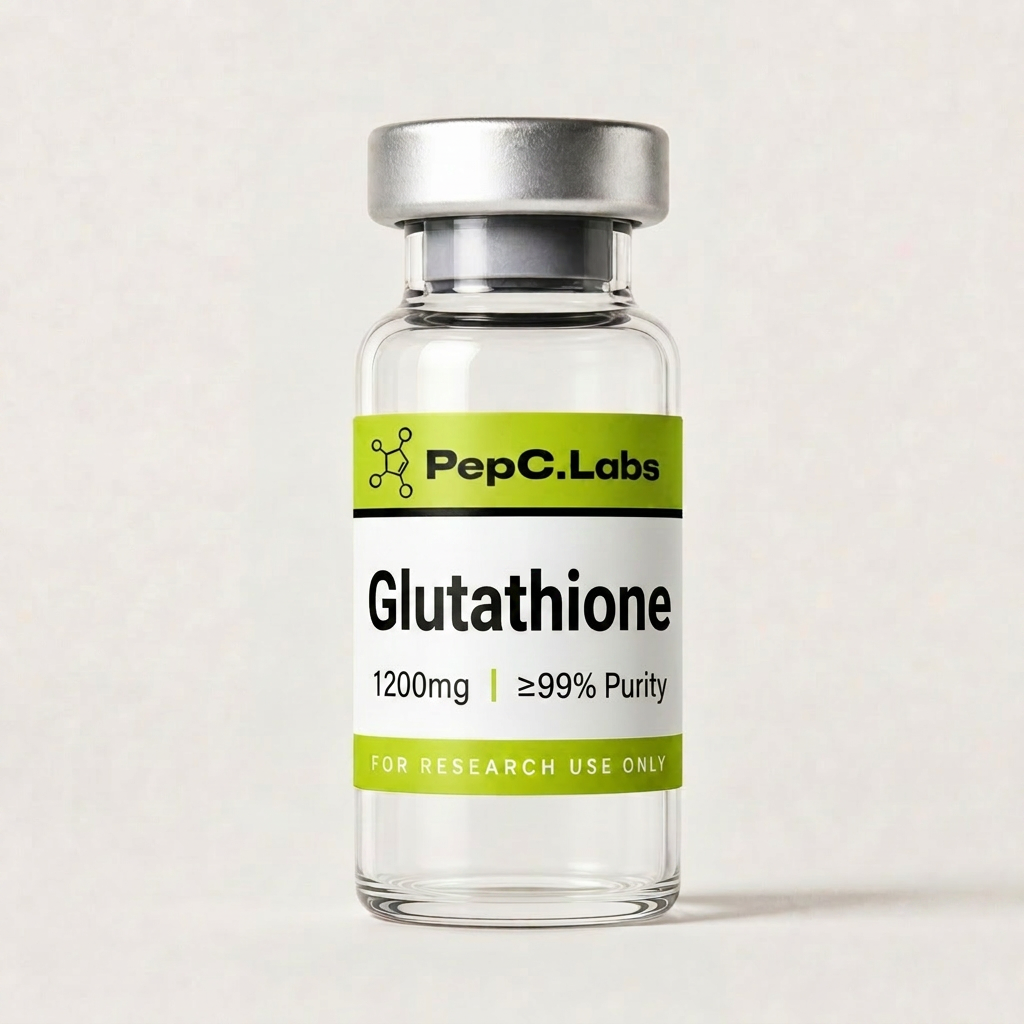
Glutathione is a naturally occurring tripeptide composed of glutamic acid, cysteine, and glycine. It is one of the most abundant intracellular antioxidants in mammals and has been the subject of decades of published research into its role in oxidative stress response and cellular detoxification pathways.
This vial contains 1200mg of Glutathione as a lyophilised powder for reconstitution with sterile diluent in the laboratory.
What is Glutathione?
Glutathione exists in two forms in living cells: a reduced form (GSH) and an oxidised form (GSSG). The ratio between these forms is a widely studied marker of cellular oxidative status in published biochemistry research. Glutathione participates in several major enzymatic detoxification pathways and serves as a cofactor for glutathione peroxidase and glutathione S-transferase.
Published research has investigated the role of glutathione in:
Oxidative stress response mechanisms
Hepatic detoxification pathway research
Free radical scavenging in cell culture models
Xenobiotic metabolism studies
Redox signalling pathway research
Mechanism of Action
Glutathione functions as a major antioxidant by donating electrons to neutralise reactive oxygen species. The reduced form (GSH) is oxidised to GSSG during this process, and is subsequently recycled by the enzyme glutathione reductase using NADPH as a cofactor. This cycle is one of the best-characterised antioxidant systems in mammalian cell biology and has been extensively studied in published biochemistry literature.
Published Research
Glutathione research spans many decades and many disciplines. Published studies have explored its role in:
Hepatic function research models
Cellular detoxification pathway studies
Inflammatory marker research
Mitochondrial function in vitro
Oxidative stress response in animal models
These studies are primarily mechanistic and preclinical in nature. Glutathione is not approved by the TGA for any therapeutic indication and is supplied strictly as a research reagent.
Quality and Verification
A laboratory report is not currently published for this listing. Contact support about documentation for the size and batch you need before ordering. The vial is shipped lyophilised to preserve stability during transit and should be stored at -20°C prior to reconstitution and 2-8°C after reconstitution in the laboratory.
Further Reading
For background on handling lyophilised research peptides, see our
reconstitution calculator.
Disclaimer
For research use only. Not for human consumption. The information provided is for educational and research purposes only. This product is not intended to diagnose, treat, cure, or prevent any disease. Always consult published peer-reviewed literature before designing research protocols.