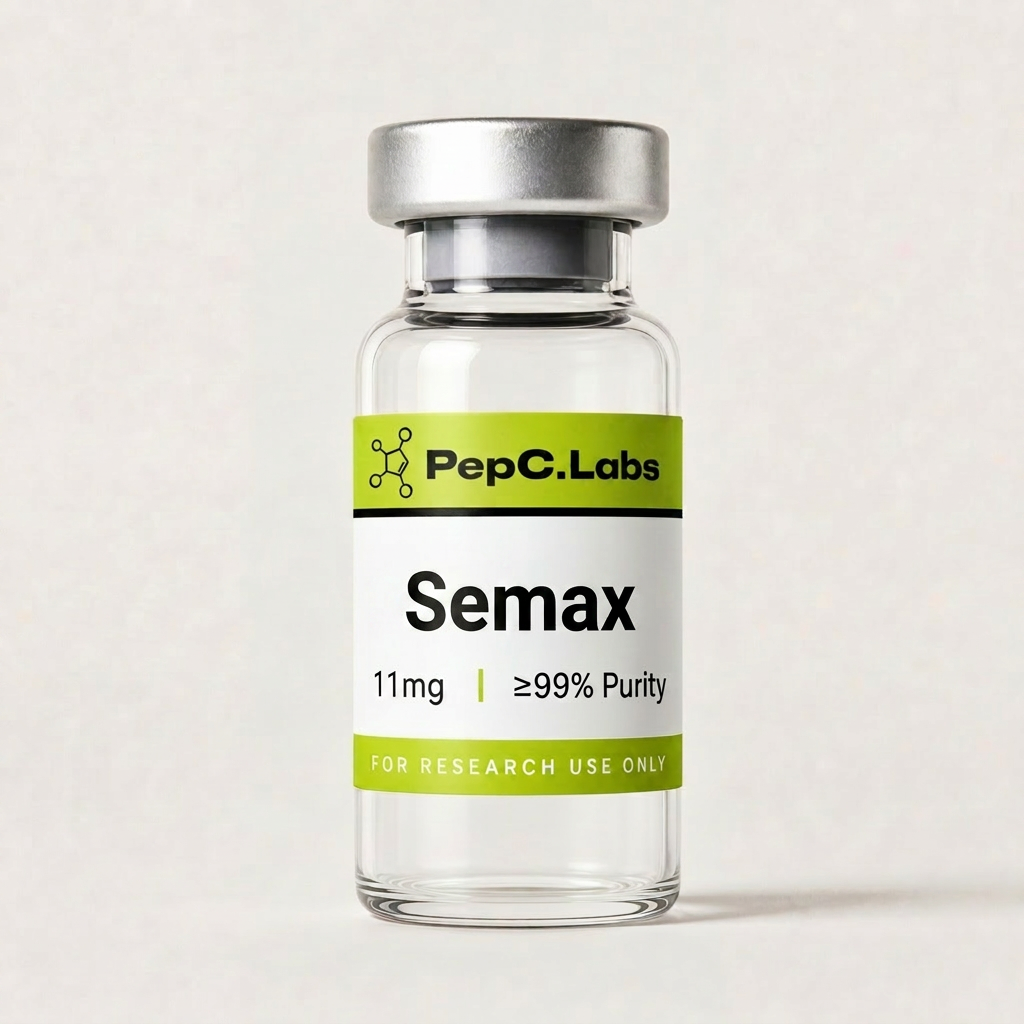
A synthetic heptapeptide analogue of ACTH(4-10). Investigated for nootropic and neuroprotective properties.
Overview
Semax is a synthetic heptapeptide analogue of the adrenocorticotropic hormone fragment ACTH(4-10). It was originally developed at the Institute of Molecular Genetics of the Russian Academy of Sciences and has been the subject of published Russian research into its nootropic and neuroprotective properties in animal models.
See the amount per vial in the product specifications. Supplied as a lyophilised powder for laboratory research.
What is Semax?
Semax is derived from a naturally occurring fragment of ACTH(4-10), modified with a C-terminal Pro-Gly-Pro sequence to improve peptide stability against enzymatic degradation. The native ACTH(4-10) fragment lacks the adrenocorticotropic activity of the full ACTH molecule but retains behavioural and cognitive research effects observed in preclinical studies.
Published research in animal models has explored Semax in the context of:
Cognitive performance research in rodent models
BDNF expression studies in the hippocampus
Neuroprotective pathway research
Cerebral ischemia research models
Nootropic mechanism research
Mechanism of Action
Preclinical studies suggest Semax may influence the expression of brain-derived neurotrophic factor and nerve growth factor in specific brain regions of rodent models. Researchers have also explored its effects on enkephalin-degrading enzymes and dopaminergic pathway activity. The precise downstream mechanisms remain an active area of investigation in the published literature.
Published Research
Most of the published literature on Semax comes from Russian research groups, with studies dating back to the 1980s. Areas of investigation have included:
Cognitive performance research in behavioural rodent models
BDNF and NGF expression studies
Cerebral ischemia research in animal models
Neuroprotective pathway research
Enkephalinase enzyme activity research
Clinical research outside of Russia is limited, and Semax is not approved by the TGA for any therapeutic indication.
Quality and Verification
A published laboratory report is linked on this product page. Check its sample description, methods and batch information, and contact support to confirm documentation for the size and batch you need. The vial is shipped lyophilised to preserve stability during transit and should be stored at -20°C prior to reconstitution and 2-8°C after reconstitution in the laboratory.
Further Reading
For background on handling lyophilised research peptides, see our
reconstitution calculator.
Disclaimer
For research use only. Not for human consumption. The information provided is for educational and research purposes only. This product is not intended to diagnose, treat, cure, or prevent any disease. Always consult published peer-reviewed literature before designing research protocols.