For laboratory research only
Conditions of supply
PepC.Labs supplies research compounds for in-vitro laboratory research only. They are not medicines, food, supplements or cosmetics, and are not for human or veterinary consumption. No product is intended to diagnose, treat, cure or prevent any condition.
By entering, I also confirm I will not use these products on people or animals, and I agree to the Terms of Service.
We record your confirmation (time and page) so we can show payment providers our terms were accepted. Asked once a year.
Payment by PayID or bank transfer.
A Certificate of Analysis is not currently linked for this product.
Published research is separate from the batch test results for this vial.
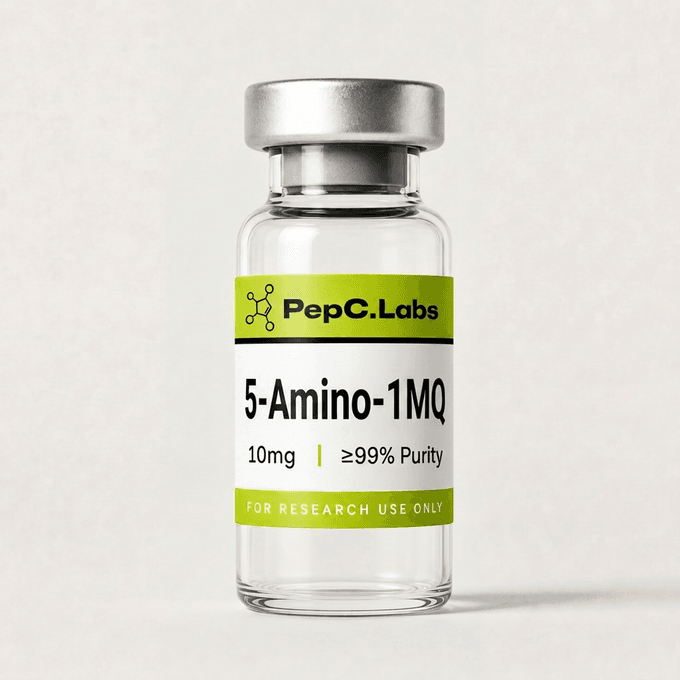
Browse the research librarySmall-molecule NNMT (nicotinamide N-methyltransferase) inhibitor, 10mg per vial. Studied in preclinical metabolic research for its role in the NAD⁺ salvage pathway and adipocyte energy metabolism.
Listed Purity
99.00%
Method
HPLC
Certificate
Not published$10.50 / mg
In stock, ships from Sydney
4.9 / 5
Customers rate our packing, speed and replies after every order, never a product. Every rating counts toward the score.
For research use only. Not for human consumption. By purchasing this product, you confirm it will be used solely for legitimate research purposes.
Small-molecule NNMT (nicotinamide N-methyltransferase) inhibitor, 10mg per vial. Studied in preclinical metabolic research for its role in the NAD⁺ salvage pathway and adipocyte energy metabolism.
5-Amino-1MQ (5-amino-1-methylquinolinium) is a synthetic small-molecule inhibitor of nicotinamide N-methyltransferase (NNMT) — it is not a peptide. NNMT consumes the methyl donor SAM to methylate nicotinamide into 1-methylnicotinamide, diverting nicotinamide away from the NAD⁺ salvage pathway. In published preclinical work, inhibiting NNMT is associated with elevated intracellular NAD⁺ and SAM, reduced lipogenesis and smaller adipocytes in cell and diet-induced-obese rodent models, and is studied in the context of insulin sensitivity and muscle function. It is natively an orally-active compound. All figures and pathways described are preclinical research observations. For research use only. Not for human consumption.