
How to Store Research Peptides: A Practical Guide
31 March 2026 · PepC.Labs
For research use only
This article is research education for laboratory and research-use audiences. Products mentioned are sold strictly for in-vitro research and not for human or veterinary consumption.
You've sourced high-purity peptides. Now the question is: how do you keep them that way?
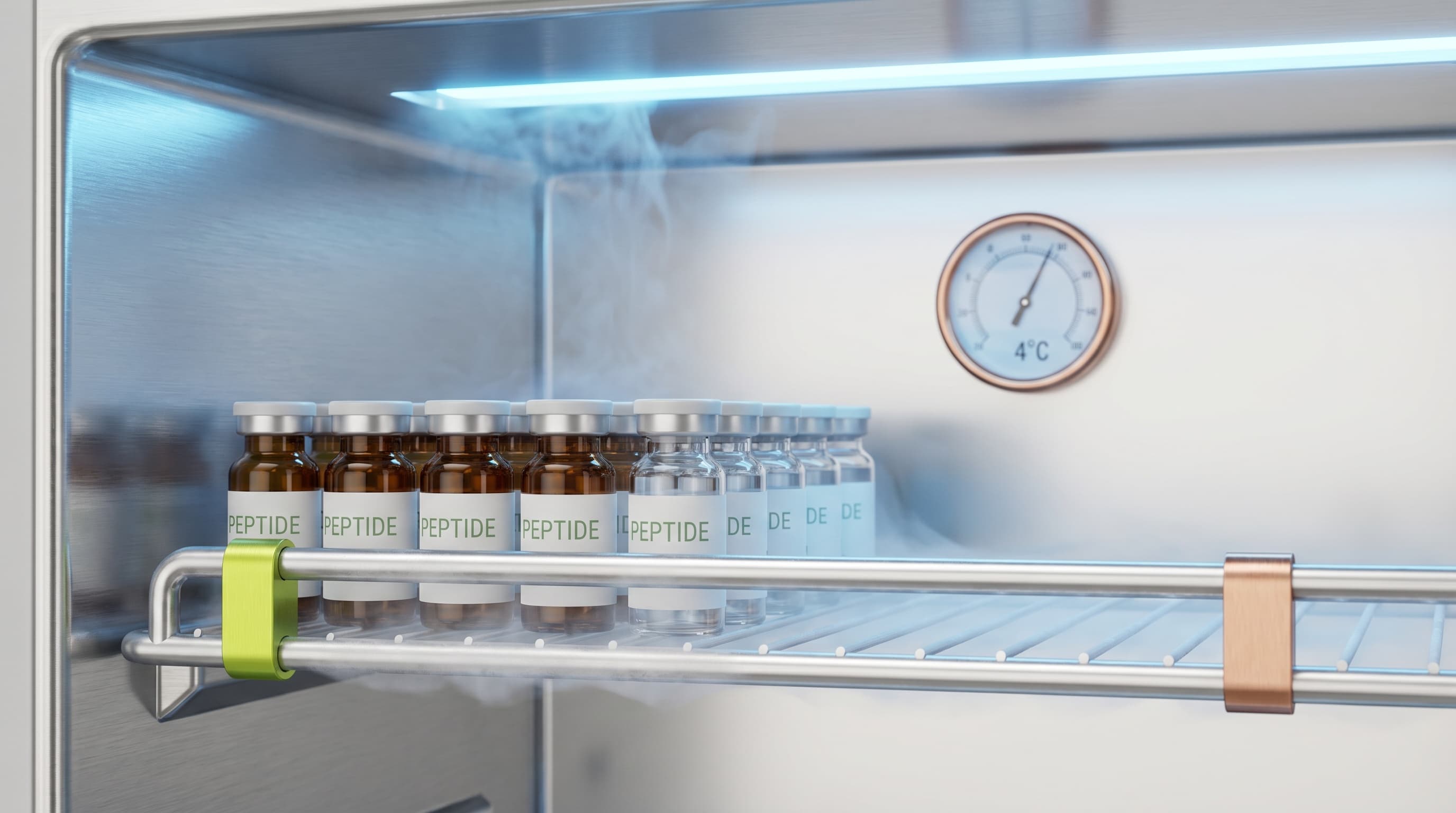
Improper storage is one of the most common causes of peptide degradation in research settings. Temperature, moisture, light, and contamination can all reduce potency and compromise experimental results. The good news is that proper storage is straightforward once you know the fundamentals.
Lyophilised (Freeze-Dried) Peptides
Most research peptides, including all PepC.Labs products, ship in lyophilised form. This is the most stable state for long-term storage.
Best practices for lyophilised peptides:
Under proper conditions, lyophilised peptides can maintain integrity for 12 months or longer.
Reconstituted Peptides
Once a peptide is reconstituted (dissolved in a solvent such as bacteriostatic water or sterile water), its stability window shortens significantly.
Best practices for reconstituted peptides:
Choosing Your Reconstitution Solvent
The two most common options are bacteriostatic water and sterile water for injection.
Bacteriostatic water contains benzyl alcohol, which inhibits microbial growth. This makes it the better choice for multi-use vials where you'll draw from the same vial across multiple sessions. PepC.Labs stocks bacteriostatic water specifically for this purpose.
Sterile water contains no preservative. It's suitable for single-use reconstitution but should not be used for vials accessed multiple times, as there's no antimicrobial protection between draws.
Common Mistakes to Avoid
Summary
The short version: keep it cold, keep it dry, keep it dark, and keep it sealed. Lyophilised peptides are robust when stored correctly, and reconstituted peptides should be refrigerated and used promptly.
If you have questions about storage for a specific peptide, reach out to us via our contact page. We're happy to help.
The information in this article is for educational and research purposes only. Products mentioned are intended for laboratory and research use only and are not intended for human consumption. Always consult relevant regulations in your jurisdiction.